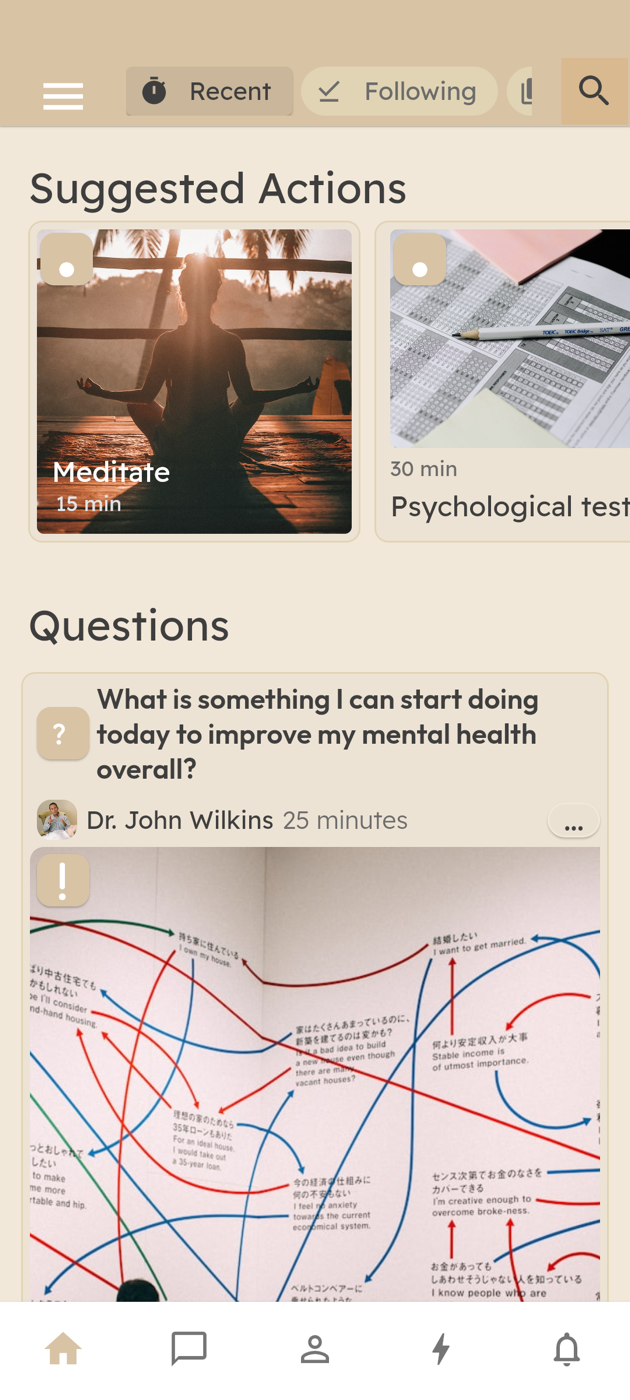
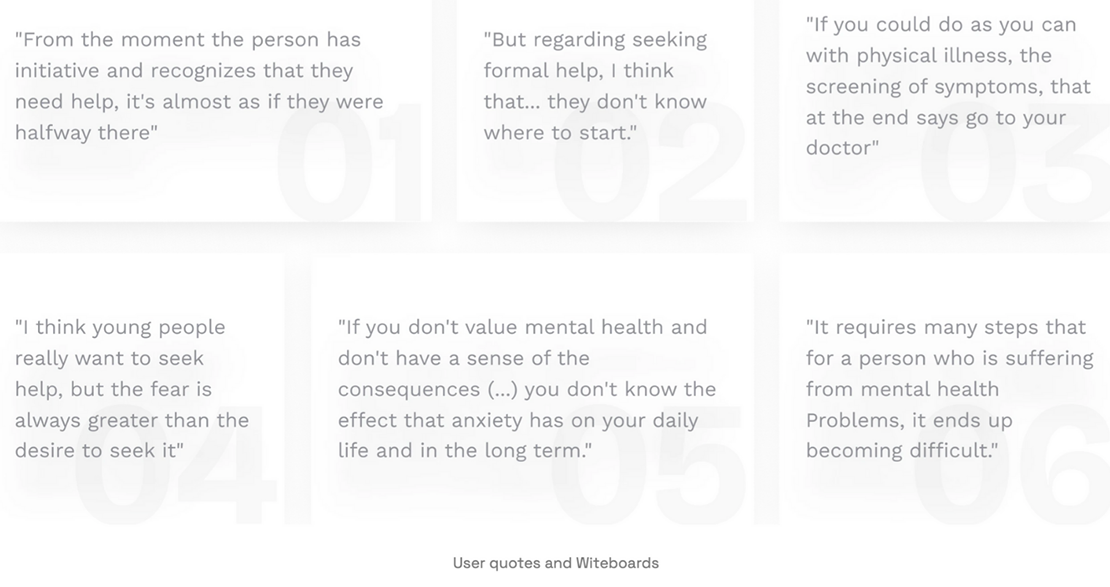
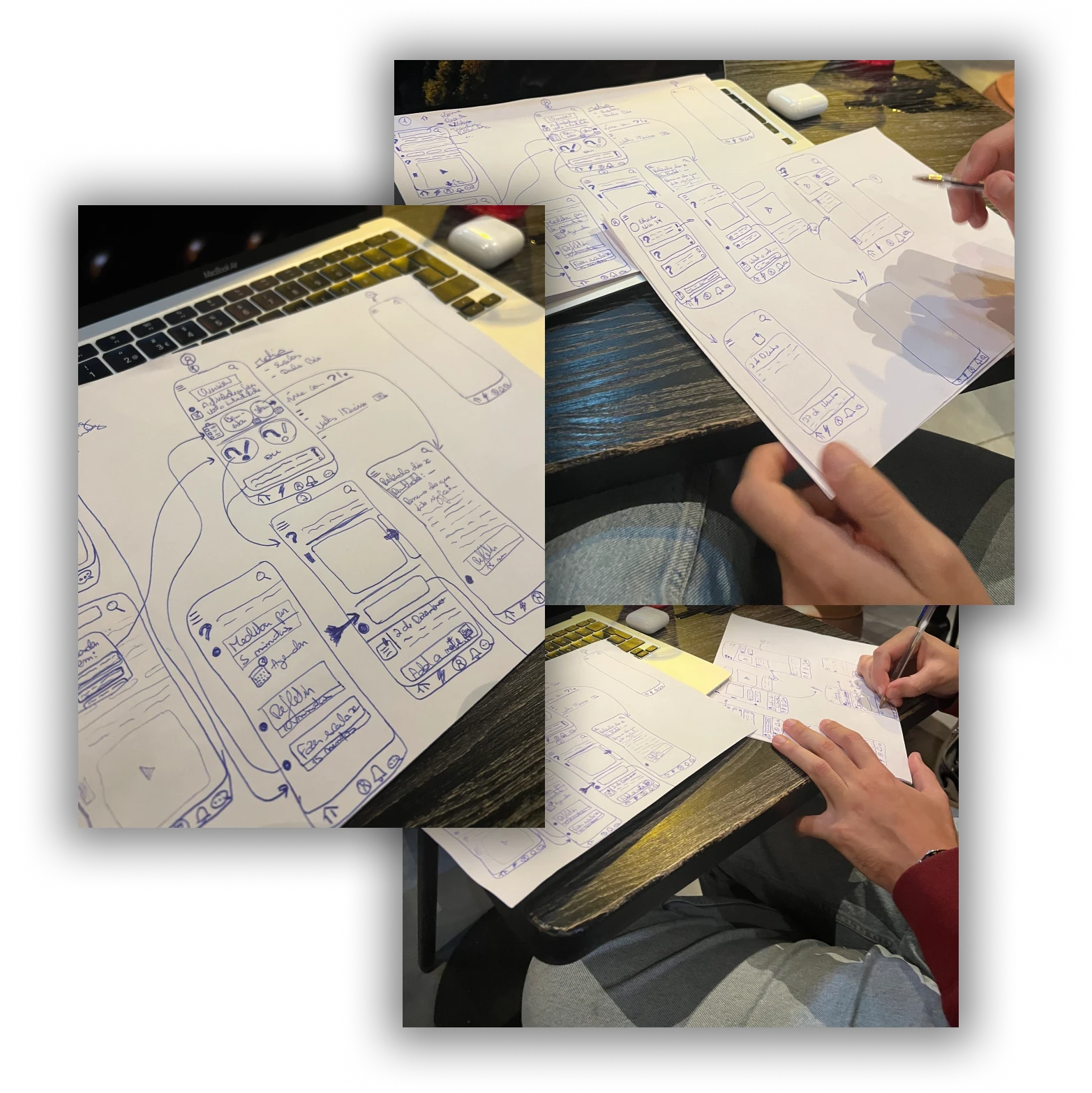
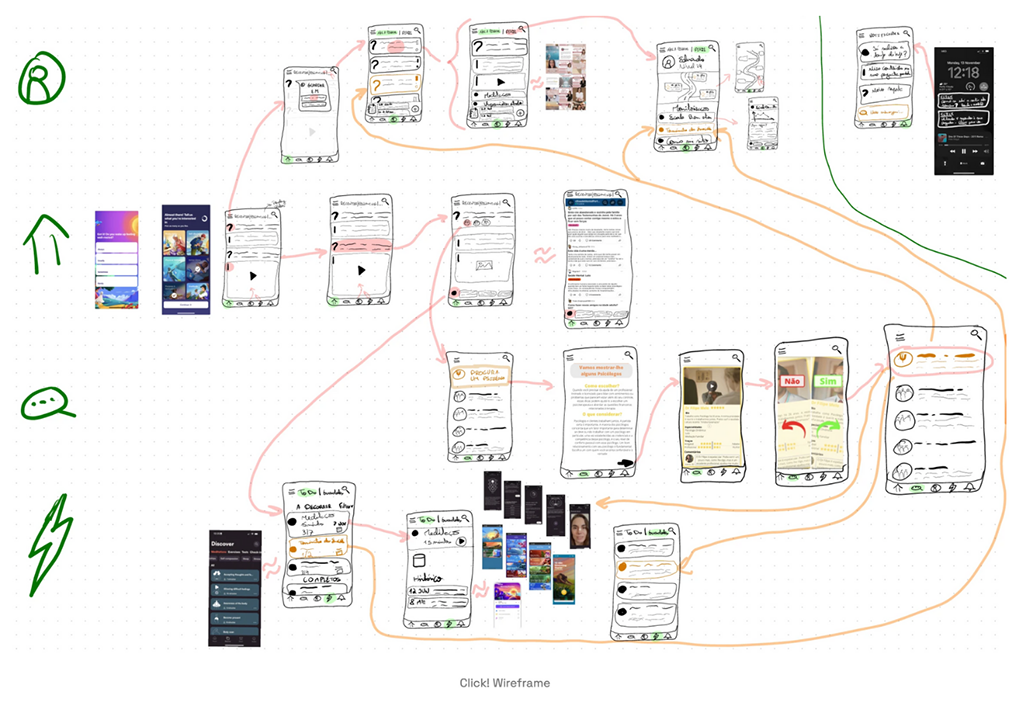
The wireframing process for Click! App was an iterative and collaborative effort. Working closely with an IT Master's student, an IT Professor, and a Psychology Professor, we structured the app's design based on research-backed principles. Instead of using traditional wireframing tools, we started with whiteboarding sessions, mapping out key features before transitioning to FlutterFlow for prototyping.
The app was built around five key areas:
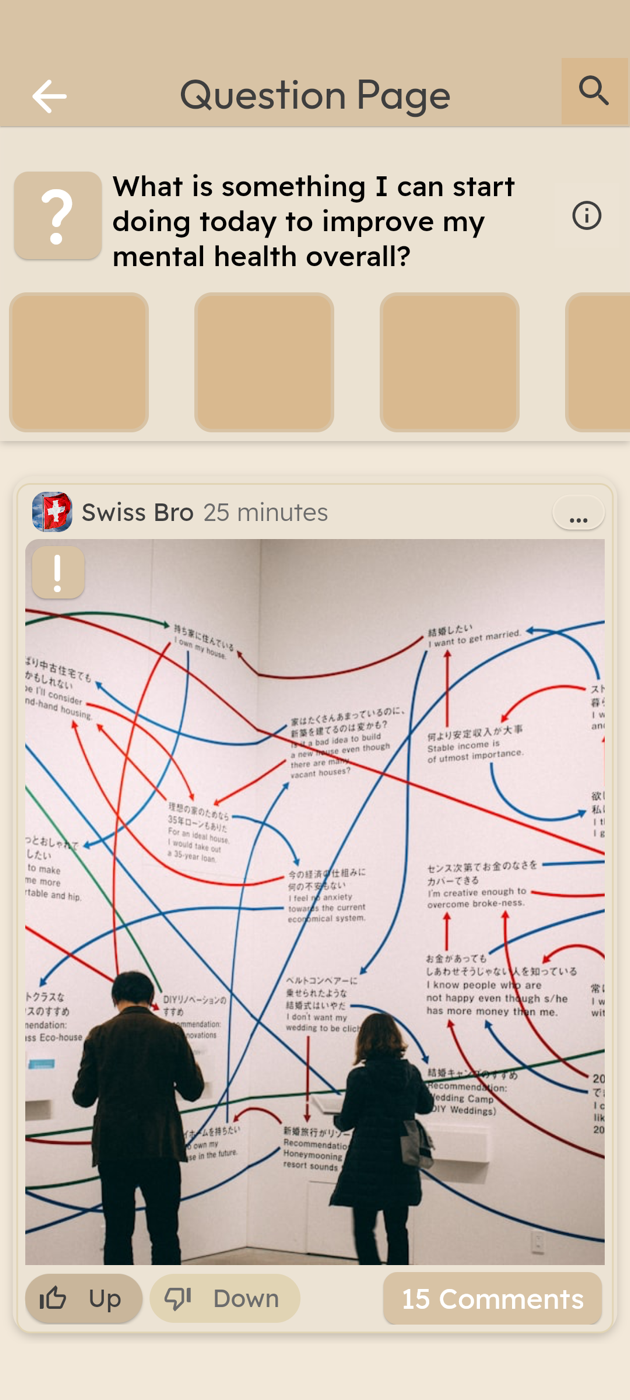
- Content & Interaction Hub – A Reddit/Quora-style space where users could engage post mental health questions, get answers from other users and professionals, plus access suggested actions.
- Tasks Area – A structured self-help section with exercises designed to support mental well-being.
- Personalized Space – A private dashboard for journaling, saved content, and emotional tracking.
- Messages & Therapist Matching – A feature that allowed to match with a therapist, given a simple profile, plus direct communication hub for connecting with professionals.
- Notifications & Engagement – A system to remind users of tasks, updates, and prompts for reflection.
Biweekly meetings with the IT and Psychology professors allowed us to refine the wireframes, ensuring technical feasibility and psychological effectiveness. The IT Master's student was responsible for translating the UI design from wireframes and FlutterFlow into an actual working app. Development was structured into sprints, where we iterated on data storage, authentication, and UI optimizations.
By the time we moved into FlutterFlow, the wireframes were already tested through these iterations, allowing for rapid prototyping and validation of core functionalities.